One in five patients admitted to trauma centres last year were involved in road crashes – the second largest cause of admissions, according to figures obtained by road safety charity Brake.
An additional analysis of more than 75,000 road crash trauma patients in the last decade shows that:
Young people account for more than one in five (21%) admissions – the largest affected age group
Children make up the biggest age group of pedestrian casualties, comprising almost one in six (17%) admissions
Motorcyclists comprise the largest proportion of admissions (25%), followed by drivers (23%), pedestrians (21%) and cyclists (16%)
Almost a third (32%) of pedestrians, and almost a quarter (24%) of cyclists, suffer serious head injuries
Speeding was a factor in almost a quarter (22%) of fatal crashes on roads in Britain last year, according to Government statistics.
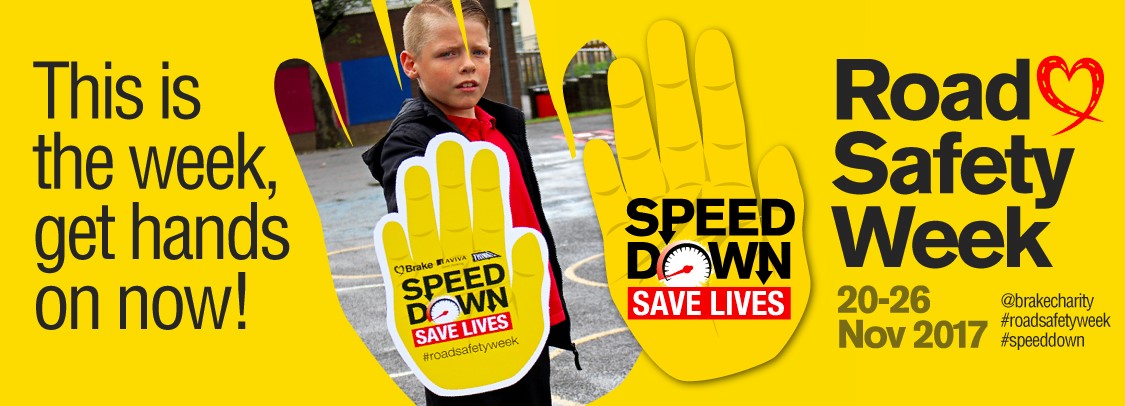
The analysis marks the start of Road Safety Week, which this year urges people to slow down to cut crashes and fatalities, and reduce the severity of injuries on roads.
One in five (20%) patients admitted to trauma centres were involved in road crashes in 2016 according to new figures obtained by Brake, the road safety charity. Road collisions were the second largest cause of trauma admissions, after falls from less than two metres.
Last year, 11,486 road users – the equivalent of 31 a day – were admitted to trauma centres in England and Wales with life-threatening injuries.
The regions with the highest proportion of road collision trauma patients were the Thames Valley (25%), North West London (23%), the West Midlands (23%), the East Midlands (22%) and East England (22%).
Brake commissioned an analysis by the Trauma Audit and Research Network (TARN), which records information about patients admitted to trauma centres, set up to deal with the most severe injuries in England and Wales.
The analysis has been published at the start of the UK’s biggest road safety event, Road Safety Week (20-26 November), coordinated by Brake. This year, thousands of organisations, schools and community groups are backing its Speed Down Save Lives campaign, helping to raise awareness about the dangers of driving too fast.
Jason Wakeford, director of campaigns for Brake, the road safety charity, said: “Not only do needless road collisions cause untold suffering but they also place an enormous strain on the NHS and other public services.
“Speeding is a factor in many deadly crashes and remains a major problem. Driving is unpredictable and if something unexpected happens on the road ahead, such as a child stepping out from between parked cars, it’s a driver’s speed that determines whether they can stop in time and, if they can’t, how hard they will hit. That’s why we’re encouraging everyone to ‘Speed Down Save Lives’ for Road Safety Week this year.
“Brake is also calling for a default 20mph limit in all built-up areas, increased enforcement and ‘Intelligent Speed Adaptation’, which helps drivers stay within the limit, to be fitted as standard to new vehicles.”
Ben Walton, adult clinical lead for major trauma in the Severn area, hosted by North Bristol NHS Trust, said: “We know that injuries sustained following road traffic collision account for a significant proportion of seriously injured patients admitted to the Major Trauma Centre at North Bristol NHS Trust.
“Road traffic incidents have a serious, often devastating impact on individuals and their families. Even if people survive and make it to the Major Trauma Centre – where specialists work together to help treat their different injuries – the long-term outcome can still be life-changing. There are many ways in which road traffic collisions can be prevented. In particular we urge people to be mindful of the speed they are travelling.”