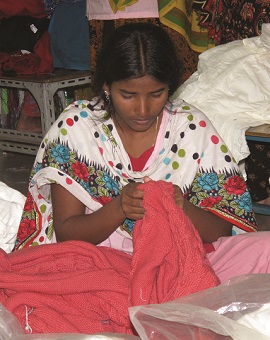
The fourth anniversary of a factory collapse in Bangladesh is a reminder of the need for continued efforts to protect workers in the ready-made garment industry, a global health and safety body said today.
The Institution of Occupational Safety and Health (IOSH) recognises that much work has been done in the wake of the Rana Plaza disaster, which claimed the lives of more than 1,100 people. However, with lives still being put at risk in supply chain factories throughout the world, IOSH believes further remediation is still required.
Richard Jones, its Head of Policy and Public Affairs, said: “Four years on, it’s important to continue building on the progress made, conscious of the scale of the task still ahead.
“We need an ongoing and joint commitment to ensure Bangladesh working conditions are made safe, healthy and sustainable. IOSH is pleased to support health and safety training for trainers and grass-root workers – vital for industries worldwide.
“We also need improved due diligence and transparency to help safeguard vulnerable people in supply chains across the globe.”
Richard was due to represent IOSH at a Houses of Parliament held to mark the Rana Plaza anniversary by Fashion Revolution, a campaign for better working conditions in supply chains.
The Rana Plaza building in Dhaka collapsed on 24 April 2013. As well as the death toll, many more were badly injured.
Following the disaster, a number of initiatives were started to prevent similar tragedies, which have been supported by IOSH.
These included the Bangladesh Accord for Fire and Building Safety, a legally-binding agreement that requires signatories and their contract factory managers to address serious risks affecting two million workers in their factories.
Meanwhile IOSH worked with Fashion Revolution to hold two Westminster events on the issue in 2014 and 2015.
And the OHS (Occupational Health and Safety) Initiative for Workers and Communities scheme has just been launched to train 75 people to cascade health and safety training for those working in factories, tanneries and other industries in Bangladesh.
Earlier this year, IOSH also welcomed the launch of the new OECD Due Diligence Guidance for Responsible Supply Chains in the Garment and Footwear Sector and its application to firms operating in (or sourcing from) the 46 adhering countries and a House of Lords and House of Commons joint recommendation to extend gangmasters licensing to the garment industry.
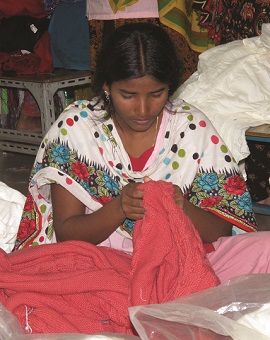
Caption: IOSH remains committed to securing better working conditions in supply chains.