

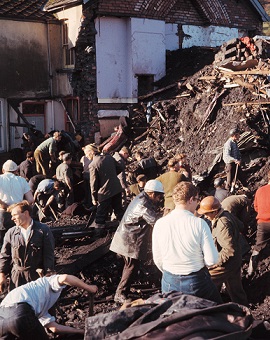
October 21st marked the 50th anniversary of the Aberfan tragedy.
Some 144 people, including 116 children, were killed when a colliery spoil tip collapsed and slid downhill in the form of a slurry. Over 40,000 cubic metres of debris covered the South Wales village, including classrooms at Pantglas Junior School.
It remains one of the most devastating UK disasters in living memory and has informed some key legislation changes since.
During the previous 50 years, a huge amount of mining debris had been left on the side of a mountain above Aberfan and heavy rain caused part of it to slide downhill. The inquiry which followed found that “ignorance, ineptitude and failure of communications” were the underlying causes, with the National Coal Board being blamed. Local authorities had previously raised concerns about the mining debris being accumulated near the village.
Richard Jones, Head of Policy and Public Affairs at IOSH, said the disaster, which happened on 21 October 1966, demonstrated the need for strong and competent leadership, effective risk management and good planning and design. It also showed why all organisations should ensure they have measures in place to guard against risks, not only to employees, but also to others who could be harmed by their activities, such as the local community.
He said: “This disaster reminds us all of the lessons and vital importance of avoiding complacency and de-sensitisation to risk. We must all be mindful of the need for vigilance, awareness, training and skill when managing risks to others.
“As well as subsequent regulation of tips, lessons from Aberfan helped inform the landmark Health and Safety at Work Act, with its risk-based approach and duty on employers to manage risk to others. The new Mining Regulations 2014 reinforce this, applying a modern, goal-setting legal framework to health and safety and placing greater responsibility on mine operators.
“This improved regulation and management have meant we’ve avoided another major failure of this type in the UK, but we must always remain alert and also seek to prevent such incidents across the world.”


