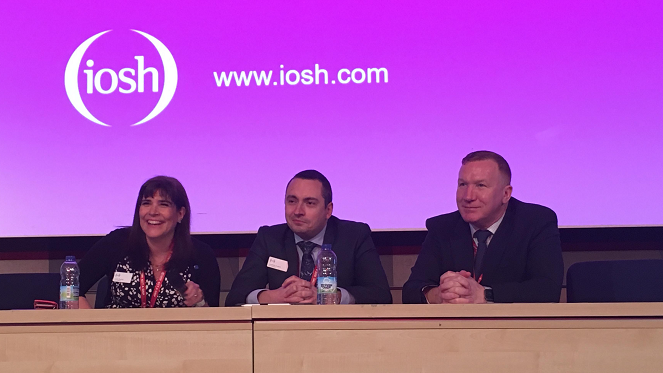
The future of robotics in health and safety and the rise of the ‘lonely worker’ were among the fascinating topics discussed at the HSE Connect 2019 conference in February.
IOSH was a Principal Partner during the event and delivered two engaging sessions to delegates covering some of the most prominent health issues facing workers and the importance of fostering good mental wellbeing in our working lives.
Here are five things IOSH shared during the HSE Connect conference:
Stress, MSDs and the ageing workforce
IOSH’s first session, titled ‘Getting health right at work whatever your size or sector’ was delivered by Richard Jones, IOSH’s Head of Policy and Public Affairs, and IOSH Vice-Presidents James Quinn, Louise Hosking and Jonathan Hughes.
The session explored some of the key issues affecting workers in the UK, including work-related stress, the need for organisations to adapt to the ageing workforce and tackling musculoskeletal disorders (MSDs), as well as other health hazards.
Recognising that work-related stress cases were at a 17 year-high in the UK last year and that stress and MSDs were the top causes of work-related sickness-absence, accounting for 82% of working days lost, IOSH highlighted the work of good employers in managing these health risks.
IOSH also outlined the compelling business case for effective management of work-related health that complements the legal and ethical imperatives. This emphasised the importance of taking a systematic approach, underpinned by competence, leadership and worker involvement, and managing health like safety.
Organisations must provide people-friendly workplaces
A significant point of discussion during the session was to advise organisations on how to develop more people-friendly workplaces, with flexible and supportive systems for those with health problems and those returning to work. There are a wide variety of measures employers can take to provide an appropriate working environment, including:
A phased return – where workers may return to work for fewer days a week and slowly increase their working hours
Changes to working hours – where workers may be able to work flexibly to better suit their individual requirements
Travelling to work alterations – providing workers with different working options (for example the opportunity to work remotely) or providing parking spaces closer to a workplace
Adjustments to working environment – providing work stations that are more accessible or closer to facilities
Future technology
A strong focus of the conference was on the need to utilise modern technologies – for example robotics – to find new ways of separating individuals from potential hazards. An increase in the use of robots in industry could be beneficial to the health of workers, and discussions centred around how certain roles, including repetitive jobs that can cause health issues such as MSDs, may become increasingly automated in the future.
Speakers suggested robotics can help to create a healthier and safer world of work, though the important factor will be how organisations integrate robotics into existing systems.
Mental ill-health and lonely workers
The second IOSH-led session was delivered by Duncan Spencer, Head of Advice and Practice, and covered ‘What’s new in mental health and wellbeing in the workplace?’ Duncan highlighted how in the modern world we are always connected, through mobile devices and the internet, which can make it hard to shut off from work. Because work can follow us home, it can have an impact on our personal lives and can increase the likelihood of people taking work-related stress home with them. In turn, this can result in people bringing stress with them to work, creating a vicious cycle that can negatively impact mental health.
Mental ill-health can particularly affect remote and lone workers, who may spend prolonged periods of time in isolation. The session also discussed the rise of the ‘lonely worker’ – workers who may be working alongside others but still lack the opportunity to interact with them due to organisational structure or role profile. This lack of socialising can lead to long-term effects on mental health.
The session concluded with a positive message – that organisations should celebrate success and focus on the positive outcomes its workforce delivers.