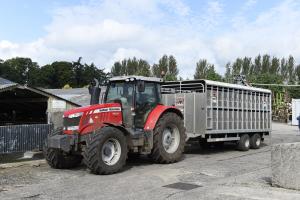
The Health and Safety Executive for Northern Ireland are offering advice on tractor maintenance and keeping safe around tractors.
From 2000-2017 there have been seven deaths on Northern Ireland farms due to faulty or poorly maintained tractor brakes / handbrakes. These accidents can be simply avoided by ensuring that the parking brake is applied before leaving the tractor cab and regularly checking that the brakes and parking brakes are in good order.
The slightest incline where you park a tractor can be enough to cause the tractor to roll downhill if the brakes have not been applied properly.
Malcolm Downey, HSENI Farm Safety Inspector said: “All forms of farm machinery present many dangers if you do not keep them in a good condition, and while they allow farmers to work quicker and more efficiently, safety is critical when carrying out important maintenance.
“Accidents involving equipment is one of the four areas targeted by the Farm Safety Partnership’s on-going campaign, ‘Stop and Think SAFE’. The four main causes of death and injury on our farms are slurry, animals, falls and equipment (SAFE).
“Please remember, working with tractors and any machinery is a risky business, so always keep them properly maintained. Also where faults arise, make sure that someone competent carries out any repairs.”
The following Farm Safety checklist should also help you and others to stay safe on your farm:
Always:
keep the brakes on all your machines properly maintained, especially the parking brakes
ensure all guards are in place on tractors and equipment, especially PTO guards
make sure that all mirrors and cameras (if fitted) are clean, correctly set and fully functional on tractors and telescopic handlers
make sure equipment is stopped fully before clearing blockages
operate tractors with enclosed safety cabs or roll bars
take care when mounting or dismounting tractors or telescopic handlers
only start your tractor from the driver’s seat
make sure that your tractors starter system works properly
make sure the brakes are connected to the tractor and work properly when pulling heavy machinery equipped with hydraulic brakes
Never:
attempt to repair machinery if you do not have the correct tools and equipment and are not competent to do so
run a tractor down a slope to start it
work near overhead power lines when tipping trailers or using high reach machinery
check hydraulic pipes for leaks by running your finger or hand along them while they are connected and under pressure